AI gives us more to attempt. Education should prepare us to try.
An alumnus's case for why college is worth more now than ever, and why it may be more within reach than you think.
The pitch for skipping college has never been better
If you're asking someone to invest four years and a substantial amount of money in a degree, “it will prepare you for the future” deserves a follow-up: which future?
A prospective student could:
- learn a trade
- build a business
- pursue an interest independently, with AI helping them understand unfamiliar material and test ideas.
Those paths carry uncertainty. So does college.
If a university's value rests mainly on delivering information and preparing students to produce answers, I'd question that investment myself.
So here's where I've landed, as a DePauw graduate who now sits on its Creative School advisory board: the case for skipping college has never been better, and the case for going has never been stronger. If you've already ruled it out, I'd ask you to read on before you close that door.
It may be more within reach than you think
Start with the number that scares most families off: the sticker price. Very few students actually pay it.
According to NACUBO's latest tuition discounting study, private nonprofit colleges discounted tuition for first-time, full-time undergraduates by an average of 57.1% in 2025–26, a record high. That's institutional grant and scholarship money, and colleges are competing for students harder than they have in years.
In other words, it's never been a better time to go looking for a scholarship.
If you, or a student you know, assumed college was out of reach:
- run the net price calculator on a few schools' websites
- talk to their admissions and financial aid offices before deciding.
The real number may surprise you.
A room where you're expected to think
Yes, you could go straight into the working world. Plenty of people do, and I'll come back to them.
But be realistic about what an entry-level job looks like for an 18- or 19-year-old without a formal education. You'll mostly be told what to do and expected to do just that.
There's dignity and real learning in that work, but you won't often be encouraged to:
- question the process
- propose a different approach
- chase an idea that isn't in the job description.
College is one of the few places built to reward exactly that. Two students taking Italian showed me what it looks like now.
Over lunch, they told me they use AI to practice conversations based on the chapters they're studying and generate flashcards for that week's material. Their coursework gives the practice direction. AI gives them more chances to try.
That stuck with me. The same tool that can translate Italian for you can also help you learn to speak it. These students were choosing to build the capability themselves, with professors who challenge their reasoning and classmates who push them further.
Access you can't get anywhere else
The part of college nobody puts on a brochure is proximity. For four years, some remarkable people are within walking distance.
Even the people building alternatives to college seem to agree. The new Horowitz Andreessen Academy calls proximity critical, and it's opening a physical campus in San Francisco to get it.
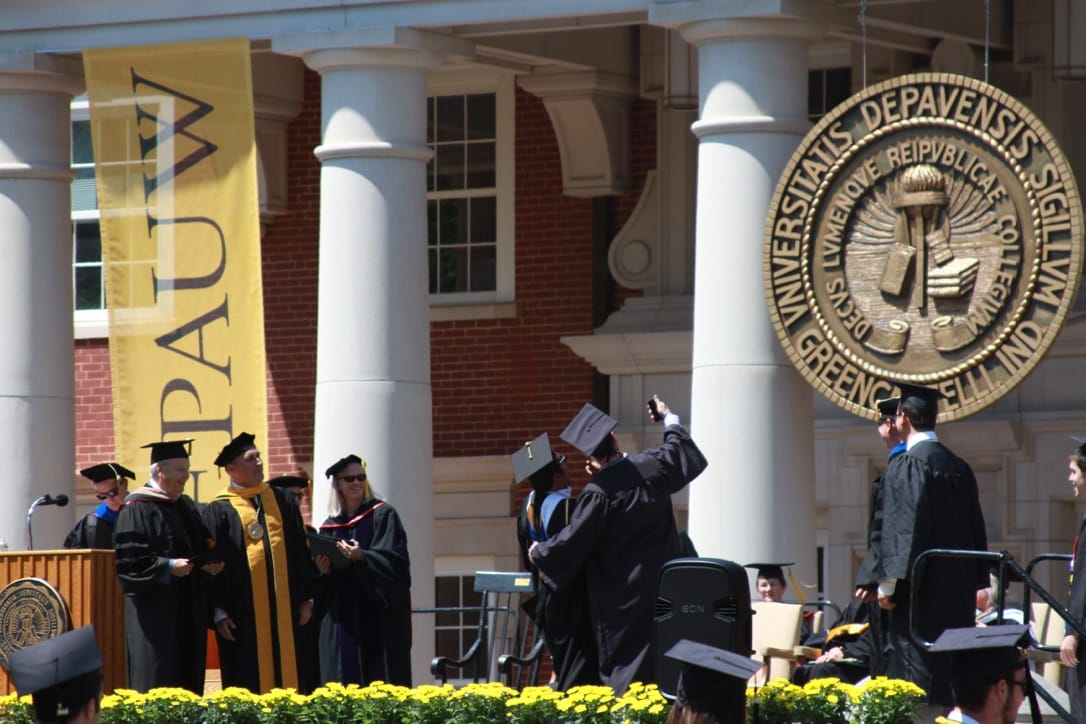
As a student, I heard President Bill Clinton deliver DePauw's 25th anniversary Ubben Lecture. I met Yo-Yo Ma. I took a selfie with Kal Penn on the commencement stage. None of that would have happened at 19 in an entry-level job.
It isn't only the famous names. It's:
- professors who'll spend an office hour on your half-formed idea
- visiting speakers who show you a career you didn't know existed
- alumni who'll take your call because you share a campus.
That access broadens your perspective in ways a search engine or a chatbot can't. AI can answer your question. People help you find a better one.
Learning to change direction
Looking back, I wish I'd better understood the room I had to experiment in my early twenties. To be fair, I did start a pizza company in my fraternity and move to Cape Town after graduation. I wasn't exactly waiting for permission.
I studied computer science and studio art, then spent over a decade in aerial cinematography, including work on Black Panther. After three earlier business ventures, I built a video streaming company that led to a successful exit. There was plenty of trial and error.
Today, I work as a fractional CTO, helping businesses make technology decisions and put AI to work.
The connection feels obvious from the inside:
- curiosity
- creativity
- technical problem-solving
- an interest in what people are trying to accomplish.
DePauw gave those interests room to grow together.
At DePauw's 2026 commencement, Nate Nichols '05 put it this way: “There's more freedom to claim your life than there's been before.” He connected that freedom to the preparation a liberal arts education can provide. Watch Nichols's commencement address.
To be clear: you can make it without a degree
I promise I'm not saying college is the only path. Plenty of people, my wife included, never went and are absolutely crushing it. They're figure-it-out people, and figure-it-out people are enormously valuable.
Peter Thiel has been making that case since 2011. His Thiel Fellowship gives people 22 and under $250,000 over two years to build something, as long as they skip or leave college. Figma's Dylan Field took it in 2012.
Everyone should be questioning whether college is the right path for them. That's a healthy question, and the answer won't be the same for everyone.
My argument is narrower: for many students, college is more valuable now than it has ever been, and more of them could go than realize it.
The job market is part of why. The Italian students mentioned friends who are scared of AI and have all but written off their job prospects. Those friends aren't imagining things.
Stanford's research on AI and early-career employment found that employment among 22-to-25-year-olds in AI-exposed occupations was 19% below the level implied by keeping pace with less-exposed peers, using payroll data through June 2026, mainly through reduced hiring. These are descriptive patterns, not causal estimates.
If the bottom rungs of the career ladder are getting thinner, the old plan of starting at the bottom and learning on the job gets harder. Four years spent building judgment, relationships, and the ability to put these tools to work looks less like a delay and more like a head start.
Where the liberal arts earn their keep
When I first arrived back on campus, I sat down with Marilyn Culler and Wendy Whitt. We discussed why journalists might be particularly well equipped to work with AI. Their habits are familiar:
- formulate a useful question
- press for a better answer
- check the sources
- decide what deserves a reader's attention.
Former ABC News producer and StoryFit founder Monica Landers makes a similar case in her essay on journalists' advantage with AI.
An answer from AI is material to investigate. Knowing what to ask next, what to trust, and what the evidence supports takes judgment.
In my work, I keep asking:
- what are we trying to accomplish?
- where is the actual difficulty?
- how will we know whether this helps?
- who needs to be involved?
A polished answer can arrive before anyone has understood the problem.
A Microsoft and Carnegie Mellon survey on AI and critical thinking found that greater confidence in AI was associated with less reported critical thinking, while confidence in one's own ability was associated with more. It measured self-reported associations, not cause and effect.
Still, it points to what an education should build: enough understanding to challenge an answer. That's what four years of interpreting evidence, communicating clearly, and considering another person's experience gives you.
More to attempt at DePauw
DePauw's AI vision connects AI literacy with critical inquiry, experimentation, and human relationships. Its AI Achievement program provides a practical starting point for students, faculty, and staff.
I'd like us to build on that with urgency. The opportunity extends beyond completing familiar work faster to attempting something previously out of reach.
One possibility:
- Bring students, a faculty member, and an alumnus together around a problem from the alumnus's field.
- Use AI to investigate options and build something testable.
- Then put it in front of the people affected.
Their feedback might reveal that the team misunderstood the problem. Good. Now there's something concrete to discuss, assumptions to revise, and a reason to collaborate.
Ask students to explain what they checked, what failed, and how their understanding changed. Try getting that assignment in your first entry-level job.
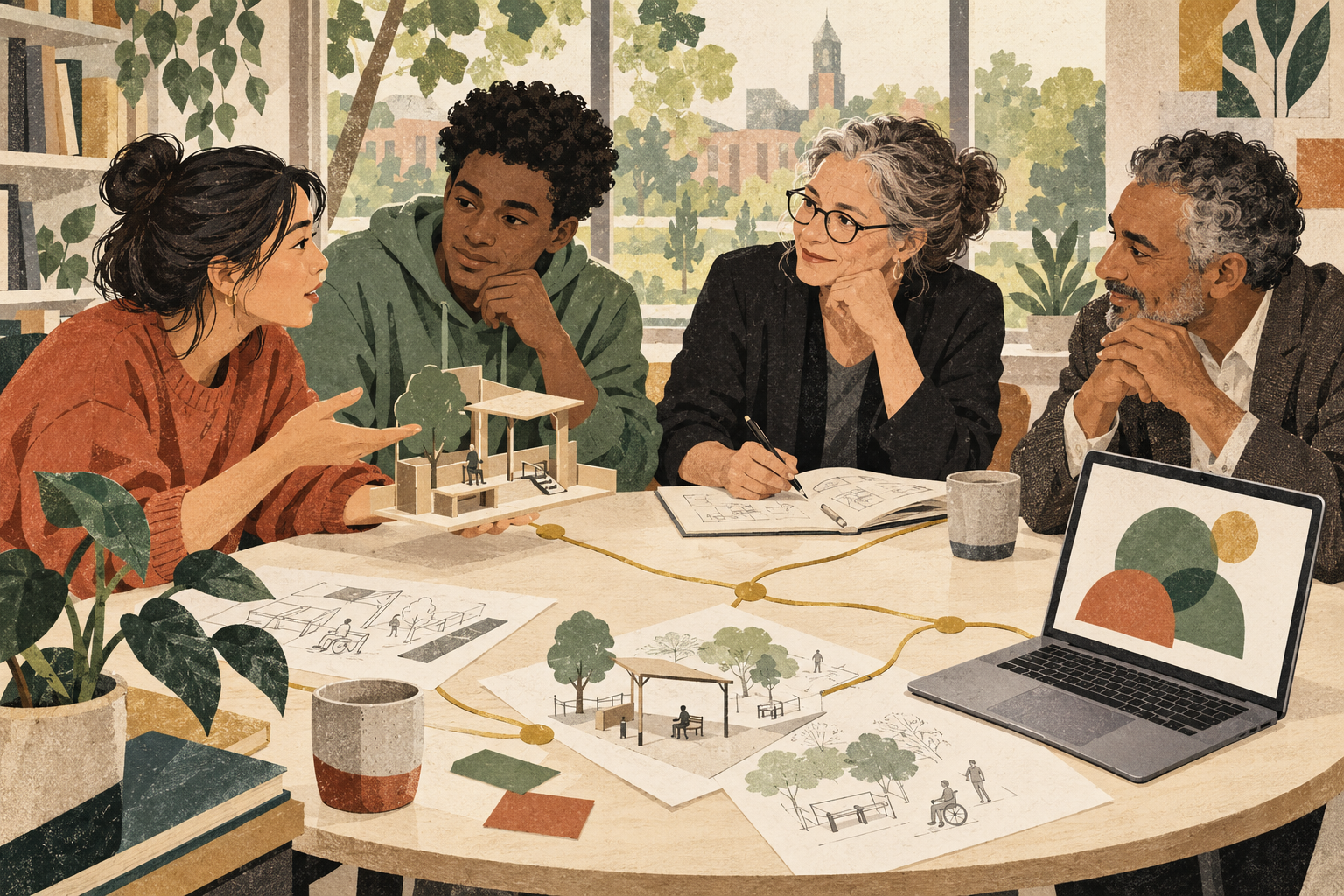
Faculty need time and support for that work. Alumni can contribute problems, introductions, and experience, while learning from students themselves. We can start with a manageable experiment and improve the next attempt.
For prospective students and parents, that's something specific to look for in an education: opportunities to use new tools, make decisions, and learn alongside people who challenge you. For those of us already in the community, it's an invitation to contribute.
Take these home
When a speaker comes to campus, go. Stay after and introduce yourself.
Use AI to practice a skill you want to develop, then bring another person into the work before deciding you've solved the problem.
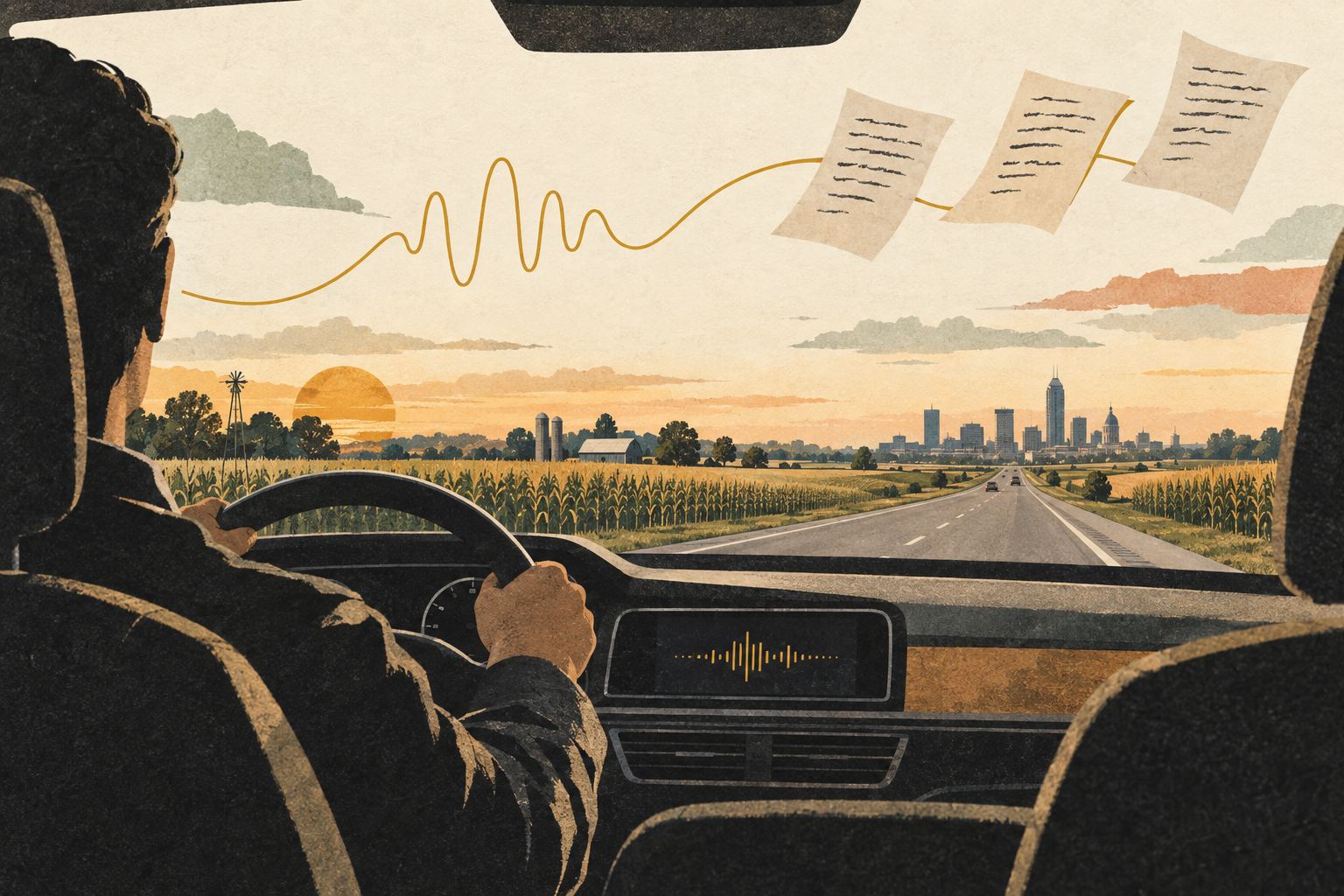
One last detail: this newsletter began while I was driving from DePauw to Indianapolis Airport, talking through these ideas by voice with ChatGPT, Grok, and Claude. I put their responses into an adversarial back-and-forth, asking them to challenge the argument and help me express what I meant.
That process helped me turn the conversations on campus into something I could share much faster. The tools helped me articulate the argument; I remain responsible for it.
Now I'd like to bring another human into the conversation.
If you didn't go to college, or you're deciding now: what would make it worth it for you? And if you did go, what did you get there that you couldn't have gotten anywhere else?
Rob Weidner, DePauw class of 2014